Online Therapy for Anxiety: Treatment with Clarity
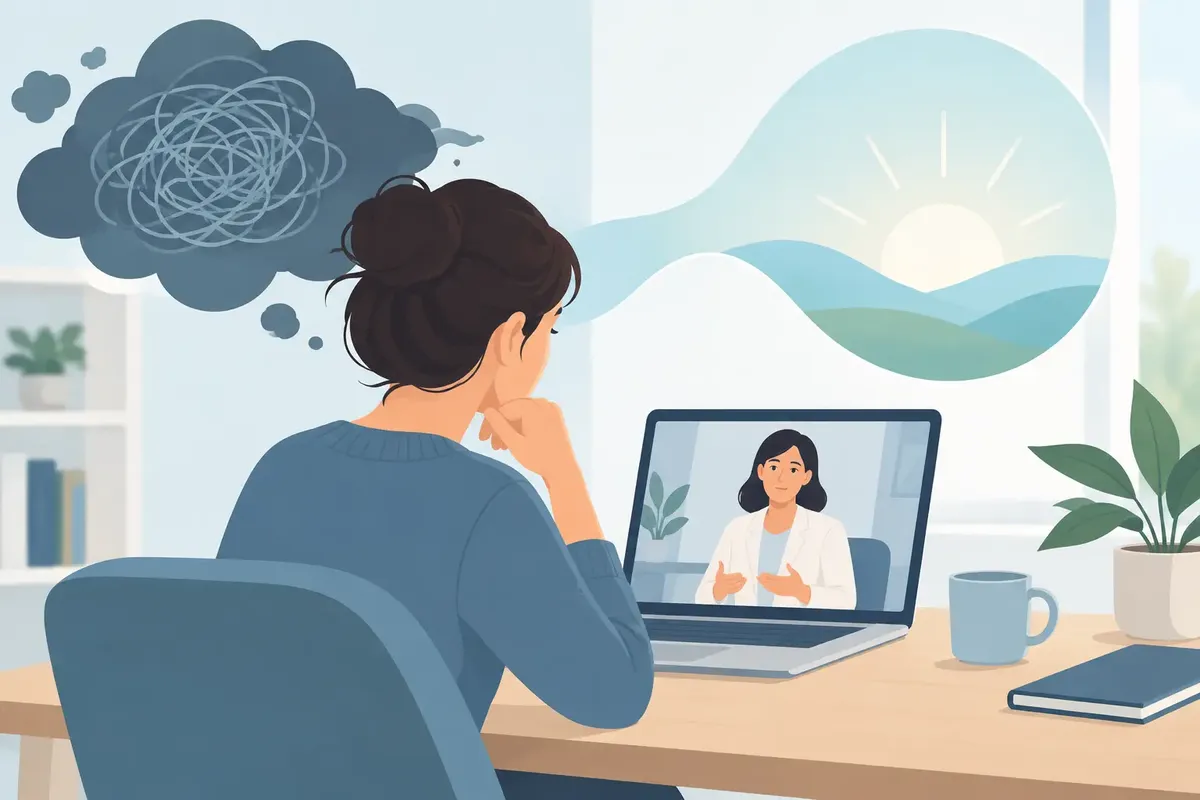
An important meeting is coming up, the restructuring at your company is picking up speed, or the merry-go-round of thoughts already starts on Sunday evening. On the outside, much still works. Inside, though, every day takes a lot of strength. Online therapy for anxiety can then be a good way to fit qualified support reliably into a busy life, without giving up personal care.
Especially for people with a lot of responsibility, the trip to a practice can add strain: time pressure, business travel, tight calendars and the wish for discretion all play a role. A psychotherapy session by video creates flexibility. But it does not simply replace the person in front of you with a screen. What matters is a sound diagnostic assessment, a protected setting and an approach that fits your concerns.
What it means to treat an anxiety disorder online
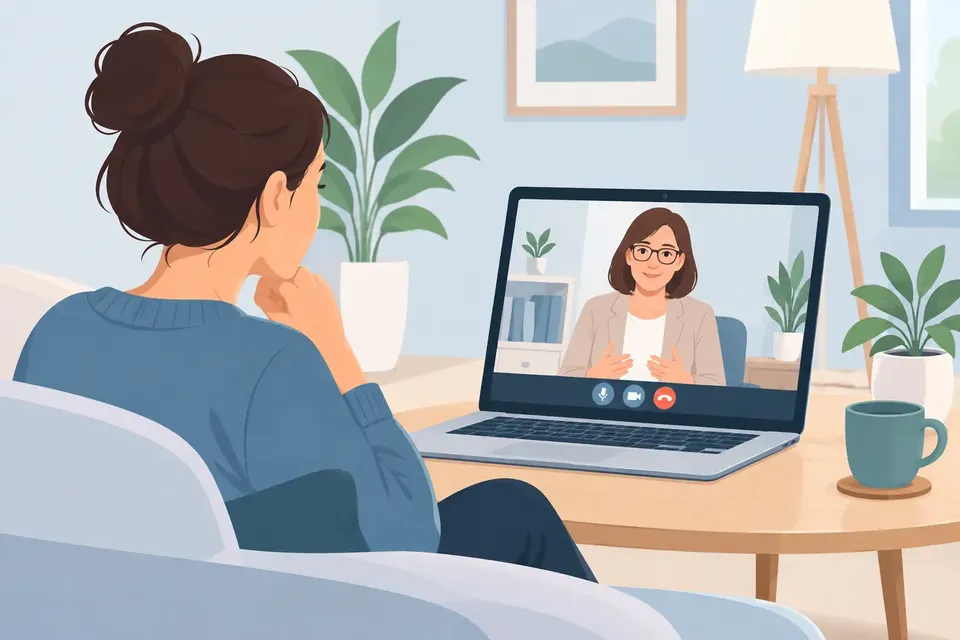
Online psychotherapy takes place as a video session. You talk with your psychotherapist in real time, you see each other, and you work together on what concretely weighs on you. The therapeutic contact is just as committed as in a session at the practice. You need a quiet, private room where you can talk undisturbed, and a stable internet connection.
Anxiety disorders have many faces. Some people suddenly experience a racing heart, dizziness or shortness of breath and fear another panic attack. Others avoid travel, presentations, elevators or social situations. Others again are tense all the time, worry about work, health or family and can hardly quiet their minds.
How much you suffer is not measured by whether you somehow still manage your daily life. When anxiety increasingly determines your decisions, relationships, rest or career, it deserves attention. Psychotherapy creates room to understand the patterns behind it and to develop new ways of acting.
Who is online therapy for anxiety a good fit for?
Video therapy can be a particularly good fit if you are very busy at work but can still commit to regular appointments. If the trip to the practice is long, if you travel a lot, or if starting therapy from home feels safer, the online format can also take pressure off.
Whether it is the best solution for you is clarified individually. Some people benefit from the familiar surroundings at home. Others deliberately want a change of place and a clear separation between therapy and everyday life. Depending on the situation, a combination of online and in-person appointments can also make sense.
With certain fears, the place of the session can even matter therapeutically. If, for example, you are afraid to leave your home, online sessions can offer a low-threshold start. For other topics, especially when exercises outside your home are planned, in-person appointments can be a helpful addition.
How behavioral therapy works online
Behavioral therapy is not about talking anxiety away or calming yourself with pep talks. Anxiety is first of all a meaningful alarm response. It becomes a problem when the alarm system goes off too often or too strongly and you start to organize your life around it.
It starts with a careful assessment together. When does the anxiety appear? Which thoughts, physical sensations and behaviors are part of it? What do you do in the decisive moment to feel safer? In the short term, avoidance can bring relief. In the long term, though, the brain often learns from it: this situation really is dangerous.
Checking thoughts instead of following them blindly
Anxious thoughts often feel like facts: "I'm sure to embarrass myself", "I can't stand this" or "If my heart is racing, something is wrong." In therapy, such judgments are not dismissed. They are checked. Together, you develop more realistic and more helpful perspectives that hold up under pressure, too.
This is not about forced positive thinking. It is about clarity: What exactly is the fear? How likely is it? Which experiences speak for or against it? And what could you do if the feared situation actually happened?
Changing behavior step by step
Concrete exercises are a central part of treating anxiety disorders. They are prepared carefully and adapted to your pace. If you avoid situations that are objectively safe but feel frightening, gradual exposure can help. You learn that anxiety can rise and fall again without you having to flee or use safety rituals.
Many exercises can be guided very well online. That can be preparing for a difficult conversation, a presentation, a phone call or entering a stressful situation. Often, small, doable steps are agreed on between sessions. That way, therapy becomes effective in everyday life instead of remaining just a good thought during the appointment.
Reinterpreting body signals
Many people with anxiety watch their bodies very closely. A fast pulse, tension or shallow breathing are then quickly read as danger. In therapy, you can learn to understand these signals better and deal with them. Breathing and attention exercises can support you. But they are not a trick to make every unpleasant feeling disappear immediately.
The goal is more inner freedom: you can notice the anxiety without it automatically deciding what you do or don't do. That strengthens trust in your own ability to act.
Online therapy for anxiety: what quality depends on
Not every digital offer is psychotherapy. Coaching, self-help programs and therapeutic treatment can all be valuable, but they are different formats. For an anxiety disorder of clinical significance, a psychotherapeutic assessment by suitably qualified professionals is the right setting.
Make sure treatment starts in a structured way. That includes an initial consultation, a diagnostic assessment and transparent agreements about goals, process, data protection and costs. The therapeutic relationship also counts. You should feel taken seriously, be able to ask questions and understand why certain steps are suggested.
Good therapy is not guided by the diagnosis alone. It takes into account your work situation, your relationships, your resources and what really matters to you. For a manager, that may mean being present in meetings again. For a self-employed person, perhaps no longer putting off decisions out of fear. For others, the focus is on allowing rest again and finding new strength.
Telling therapy and coaching apart
Coaching can be helpful if you want to find your bearings in a stressful phase at work, communicate with more confidence or act with more focus and self-assurance. It is oriented toward development and solutions. Treating a mental illness, however, is not its job.
If panic, strong avoidance, persistent worry or physical anxiety symptoms clearly restrict your daily life, psychotherapy is the professionally appropriate path. The therapeutic process often has positive effects on work and leadership, too. But the starting point remains treating the distress, not optimizing performance.
When online treatment alone is not enough
Online treatment requires that your situation is stable enough and that you can reliably follow through on agreements. If there is an acute risk of harming yourself or others, in severe crises, or if you have no protected place for the session, you need immediate in-person help. In an acute emergency, contact the emergency number 112, the medical on-call service (116117) or a psychiatric emergency clinic.
Even with less acute strain, the form of treatment may change. If in-person appointments feel more helpful for a while, that is not a defeat. Good therapy is guided by what gives you security and makes growth possible.
The first step can be small
Many people wait a long time before they look for support. They explain the tension with a difficult project phase, high responsibility or a lack of resilience. Sometimes that is true. But if the anxiety stays, spreads or takes up more and more space, you do not have to carry it alone.
In an initial consultation, you can sort out your concerns and clarify whether online psychotherapy suits you. You do not need a finished explanation for that. It is enough to notice: things should not go on like this. With a clear plan, professional support and small, doable steps, more calm, trust and inner strength can grow again.
Quick answers
Does online therapy for anxiety work as well as sessions at the practice?
Online psychotherapy is held as a live video session, and the therapeutic contact is just as committed as in person. Whether it is the best format for you is clarified individually; a mix of online and in-person sessions is also possible.
What do I need for an online therapy session?
A quiet, private room where you can talk undisturbed, and a stable internet connection.
When is online therapy not enough?
In acute crises or if there is a risk of harming yourself or others. Then you need immediate in-person help: emergency number 112, the medical on-call service (116117) or a psychiatric emergency clinic.